
Generative Artificial Intelligence has rapidly transformed the way modern digital systems are built and used. It is no longer limited to experimental research but has become a core technology powering tools used in content creation, software development, data analysis, customer support, and business automation. Companies across the world are now integrating Generative AI into their products to improve efficiency, reduce costs, and deliver smarter user experiences.
This course provides a complete and structured learning journey into Generative AI using Amazon Web Services (AWS). It focuses on helping learners understand how modern AI systems are designed, trained, and deployed at scale using cloud-based infrastructure. The course is suitable for beginners as well as advanced learners who want to build strong practical knowledge in artificial intelligence and cloud computing.
Through this course, learners will explore foundation models, prompt engineering, fine-tuning techniques, large-scale AI training, reinforcement learning with human feedback, and real-world deployment strategies using AWS services.
What is Generative AI?
Generative AI is a branch of artificial intelligence that focuses on creating new and original content instead of only analyzing existing data. Unlike traditional machine learning systems that are designed for classification or prediction, generative models can produce human-like text, realistic images, computer code, audio, and even video content.
These models are trained on massive datasets that allow them to learn patterns, structures, and relationships within data. Once trained, they can generate new outputs that closely resemble human-created content while maintaining context and meaning.
In recent years, Generative AI has become a key driver of innovation across industries. It is used in chatbots, virtual assistants, content generation platforms, software development tools, marketing automation systems, and research applications. Understanding how these systems work is essential for anyone who wants to build a career in modern technology.
Why Should You Learn Generative AI
Learning Generative AI has become one of the most valuable skills in today’s job market. As organizations continue to adopt AI-driven solutions, the demand for professionals who understand how to build and manage intelligent systems is increasing rapidly.
Generative AI skills open the door to multiple career paths, including artificial intelligence engineering, machine learning development, data science, cloud computing, and AI product development. It is not limited to technical roles only, as business professionals and entrepreneurs also benefit from understanding how AI can improve operations and decision-making.
Another important reason to learn this field is its future potential. Generative AI is expected to play a major role in shaping the next generation of digital products and services. Professionals who master this technology early will have a strong competitive advantage in the evolving job market.
What Will You Learn in This Course?
This course is designed to provide a complete understanding of Generative AI systems and their development lifecycle using AWS technologies. Learners will start from the fundamentals and gradually move toward advanced concepts and real-world applications.
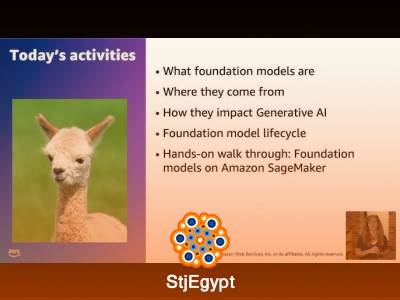
The course covers how foundation models work, how they are trained, and how they are used in practical applications. It also explains how to customize and optimize these models for specific business needs. In addition, learners will gain hands-on understanding of cloud-based AI development and deployment.
The learning path is structured to ensure that students not only understand theoretical concepts but also gain practical knowledge that can be applied in real projects and professional environments.
Understanding Foundation Models
Foundation models are the core building blocks of modern Generative AI systems. These are large-scale AI models trained on vast amounts of data to perform a wide range of tasks, such as language understanding, text generation, and problem-solving.
The course explains how these models are built and why they are so powerful. Learners will understand how a single model can be adapted to perform multiple tasks without requiring separate training for each use case. This flexibility makes foundation models highly valuable in modern AI applications.
Additionally, the course explores the advantages and limitations of foundation models, helping learners understand when and how to use them effectively in real-world scenarios.
Selecting the Right Foundation Model
Not all foundation models are suitable for every task. Choosing the right model depends on several factors, including performance requirements, cost, scalability, and the complexity of the application.
This section of the course teaches learners how to evaluate different models and select the most appropriate one based on project needs. It also explains how model selection impacts system performance, response accuracy, and operational efficiency.
By understanding these principles, learners will be able to make informed technical decisions when designing AI-powered solutions.
Learning Prompt Engineering
Prompt engineering is a critical skill in Generative AI that focuses on designing effective inputs to guide model outputs. The way a prompt is written can significantly influence the quality and accuracy of the generated response.
The course teaches how to structure prompts in a way that improves clarity, reduces ambiguity, and enhances output relevance. Learners will also explore real examples showing how different prompt styles can lead to different results from the same model.
Mastering prompt engineering allows users to get better performance from AI systems without modifying the underlying model itself.
Developing and Optimizing AI Models
This part of the course focuses on advanced techniques used to improve and customize Generative AI models for specific use cases. Learners will gain insights into how AI systems are trained, refined, and optimized for real-world applications.
The section also explains how organizations adapt pre-trained models to meet their specific requirements, improving accuracy and efficiency in specialized domains such as healthcare, finance, and customer service.
Fine-Tuning Foundation Models Fine-tuning is the process of adapting a pre-trained model using specialized data to improve its performance on a specific task. Instead of building a model from scratch, fine-tuning allows developers to customize existing models efficiently.
The course explains how fine-tuning improves model accuracy and relevance by exposing the model to domain-specific datasets. This makes it possible to create AI systems that are highly specialized and better aligned with business needs.
Learners will also understand when fine-tuning is necessary and how it differs from other optimization techniques.
Training New AI Models
In addition to fine-tuning, the course explores how new foundation models are trained from the ground up. This involves preparing large datasets, designing training pipelines, and using powerful computing resources to process massive amounts of data.
The course introduces the challenges associated with large-scale training, including computational cost, data management, and model optimization. Learners gain insight into how cloud platforms like AWS support these complex processes.
Preparing Large-Scale Training Data
High-quality data is one of the most important factors in building successful AI systems. This section explains how to collect, clean, and organize large datasets for training purposes.
The course also highlights how poor-quality data can negatively affect model performance, leading to inaccurate or biased results. Proper data preparation ensures that models learn effectively and produce reliable outputs.
Building Scalable AI Solutions with AWS
AWS provides a powerful cloud infrastructure that supports the development, training, and deployment of Generative AI systems. This section explains how cloud services enable scalability, flexibility, and efficiency in AI development.
Learners will understand how to use AWS tools to deploy models, monitor performance, and manage resources effectively. The course also covers best practices for building production-ready AI applications that can handle real-world workloads.
Understanding Reinforcement Learning with Human Feedback (RLHF)
Reinforcement Learning with Human Feedback (RLHF) is an advanced technique used to improve AI model performance by incorporating human preferences into the training process.
This method helps models generate more accurate, useful, and context-aware responses. The course explains how RLHF works and why it has become a key component in modern Generative AI systems.
Learners will gain an understanding of how human feedback is used to refine AI behavior and improve overall output quality.
Skills You Will Gain
By the end of this course, learners will develop a strong set of practical skills, including understanding Generative AI fundamentals, working with foundation models, applying prompt engineering techniques, and performing model fine-tuning.
They will also gain knowledge in preparing datasets, understanding AI development lifecycles, using AWS services for AI deployment, and applying reinforcement learning techniques to improve model performance.
These skills are highly valuable in today’s technology-driven job market and can be applied across multiple industries.
Who Should Take This Course? This course is designed for a wide range of learners, including students, software developers, machine learning engineers, data scientists, cloud engineers, and AI enthusiasts.
It is also suitable for business professionals and entrepreneurs who want to understand how Generative AI can be applied to improve business operations and decision-making processes.
Whether starting from scratch or advancing existing knowledge, this course provides a structured path to mastering modern AI technologies.
Why Learn Generative AI with AWS?
The combination of Generative AI and AWS cloud services represents one of the most powerful skill sets in the modern technology industry. AWS provides scalable infrastructure and advanced tools that simplify the development of AI systems.
By learning both technologies together, professionals can build intelligent applications that are scalable, efficient, and production-ready. This combination is highly sought after in industries such as software development, healthcare, finance, education, and e-commerce.
Mastering these skills provides a strong foundation for a successful career in artificial intelligence and cloud computing.
Frequently Asked Questions (FAQ)
Is this course suitable for beginners?
Yes, the course is designed to start from basic concepts and gradually progress to advanced topics, making it suitable for beginners as well as experienced learners.
Will I learn AWS in this course?
Yes, the course explains how AWS services are used to build, train, and deploy Generative AI applications in real-world environments.
What skills will I gain?
Learners will gain skills in Generative AI, foundation models, prompt engineering, fine-tuning, data preparation, RLHF, and AWS-based AI development.
Is this course useful for developers and data scientists?
Yes, it is highly valuable for developers, data scientists, and cloud engineers who want to build modern AI systems.
Will I understand how modern AI models work?
Yes, the course provides a clear and structured understanding of how foundation models and Generative AI systems are designed, trained